
Total: $0.00
Taxes and shipping calculated at checkout
PFAS are a large group of synthetic chemicals that can enter drinking water through contaminated groundwater, industrial releases, firefighting foams, and other sources. PFOA and PFOS are among the most widely studied PFAS compounds, and because these chemicals can be present at very low concentrations, water testing is an important first step in understanding what may be in your water.
Freedom Water Systems offers filtration solutions designed to reduce certain PFAS compounds, including PFOA and PFOS. The right treatment approach depends on the specific PFAS present, concentration, overall water chemistry, and the type of filtration system being used.
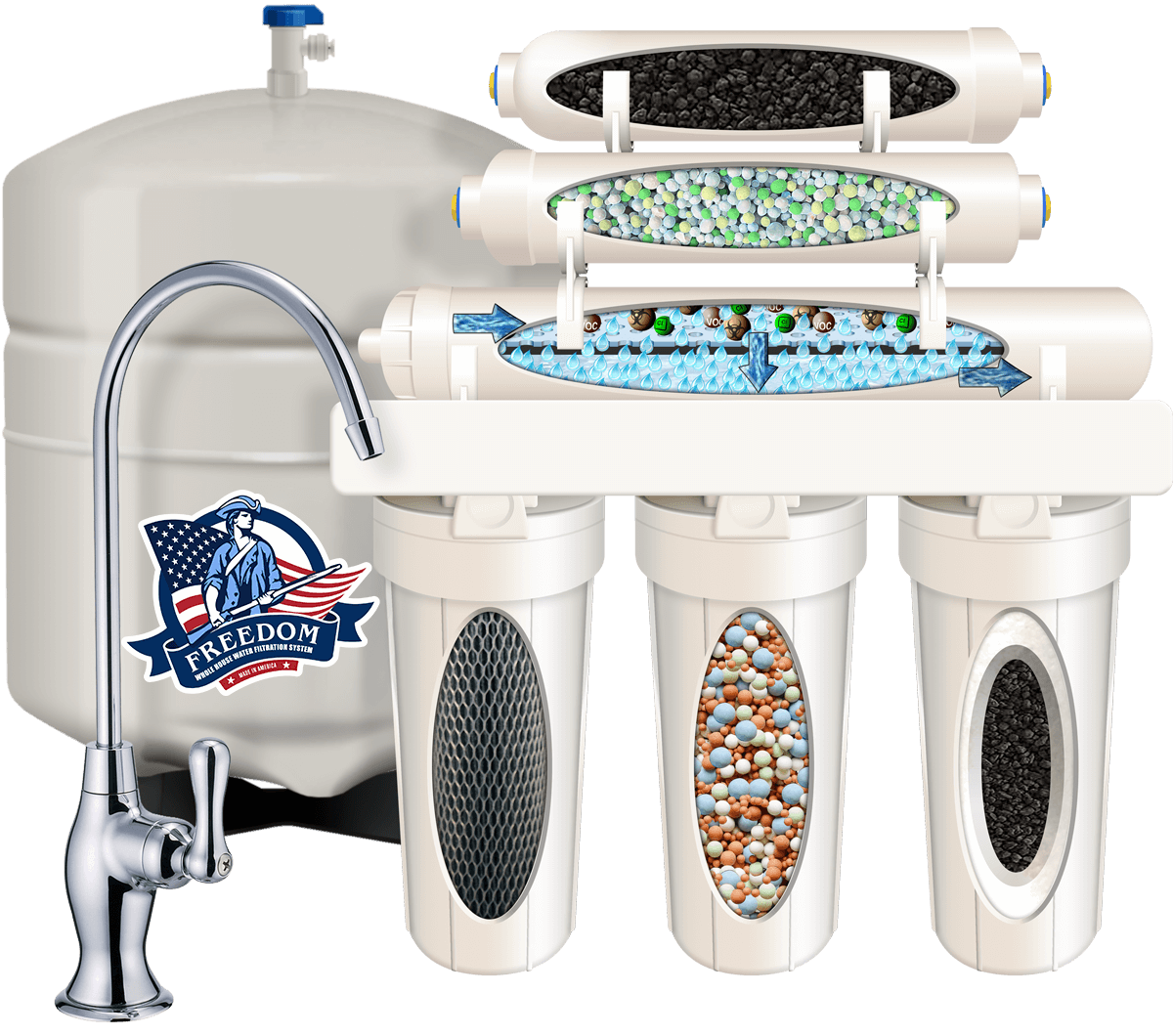
PFAS treatment depends on the specific compounds present, their concentration, and your overall water chemistry. Technologies commonly used for PFAS reduction include activated carbon, ion exchange, and reverse osmosis, although performance can vary by system and water conditions.
For drinking and cooking water, reverse osmosis can provide targeted treatment at the tap. If testing shows PFAS in your water, the best next step is to match the treatment approach to your actual results rather than choosing a system based on PFAS concerns alone.

For additional information about PFAS in drinking water and treatment options, visit the U.S. EPA PFAS resources.
PFAS generally cannot be detected by taste, smell, or appearance. The best way to know whether PFAS are present is through water testing or by checking available results from your local water utility. Private well owners may need to arrange their own testing.
Yes. Certain treatment technologies can significantly reduce PFAS levels in drinking water. Common options include granular activated carbon, ion exchange, and reverse osmosis. The effectiveness of a system depends on the specific PFAS present, water chemistry, filter design, and proper maintenance.
There is no single filter that is best for every home. Granular activated carbon, ion exchange, and reverse osmosis are all used for PFAS reduction, but performance varies by contaminant and system. EPA recommends choosing a filter that has been independently certified for PFAS reduction when possible.
Reverse osmosis is one of the treatment technologies used to reduce PFAS in drinking water, including PFOA and PFOS. It is typically used as a point-of-use treatment for drinking and cooking water, and performance depends on the specific system and maintenance.
That depends on your water test results, treatment goals, and the PFAS compounds present. A point-of-use system treats water at a specific faucet, while a point-of-entry system treats water as it enters the home. The appropriate approach should be based on your actual water conditions and the performance capabilities of the system being considered.
PFAS are a large group of synthetic chemicals that have been used in industrial processes and consumer products for decades. PFOA and PFOS are two of the most widely studied compounds within the PFAS family.
Because PFAS can be present in drinking water at very low concentrations, water testing and local water-quality information are important first steps when deciding whether treatment is appropriate for your home.
PFAS can enter groundwater and surface water through a variety of sources, including:
Once released, PFAS can persist in the environment and may eventually reach public water supplies or private wells.
Several treatment technologies are commonly used for PFAS reduction. Performance can vary depending on the specific PFAS compounds present, their concentration, water chemistry, flow rate, filter design, and maintenance.
Granular activated carbon, or GAC, can adsorb certain PFAS compounds as water passes through the filter media. Effectiveness depends on the type of PFAS, carbon media, contact time, and other water conditions.
Certain ion-exchange resins can attract and capture PFAS compounds from water. System design, resin selection, contaminant levels, and overall water chemistry all affect treatment performance.
Reverse osmosis can significantly reduce many PFAS compounds and is commonly used as a point-of-use treatment for drinking and cooking water.
There is no single filtration method that is right for every home. The appropriate treatment approach depends on which PFAS compounds are present, their concentration, your water source, and any other water-quality concerns that may need to be addressed.
For drinking and cooking water, a properly selected reverse osmosis system may provide targeted PFAS reduction at the tap. Other treatment technologies, including activated carbon and ion exchange, may also be appropriate depending on the water conditions and treatment goals.
If you are concerned about PFAS in your drinking water, start by checking available testing information from your local water utility. Private well owners or homeowners without recent PFAS results may want to consider laboratory testing before selecting a treatment system.
Learn more about PFAS and home water filtration from the U.S. EPA.
Start with your water conditions. Freedom Water Systems can help you understand your results and determine which filtration approach may be appropriate for your home.


